
When Should You Replace a Commercial Boiler?
Technical and economic criteria for deciding whether to replace or extend the life of a boiler in a commercial or institutional building.
At a Glance
The decision to replace a boiler hinges on reliability, total cost of ownership and whether the unit still matches the building's current needs. Repeated breakdowns, parts unavailability and unstable combustion weigh heavily against costly repairs. An upgrade can improve efficiency and simplify maintenance, but the decision must rest on a solid diagnosis and clear operational goals.
What Operational Signals Point Toward Replacement Rather Than Repair?
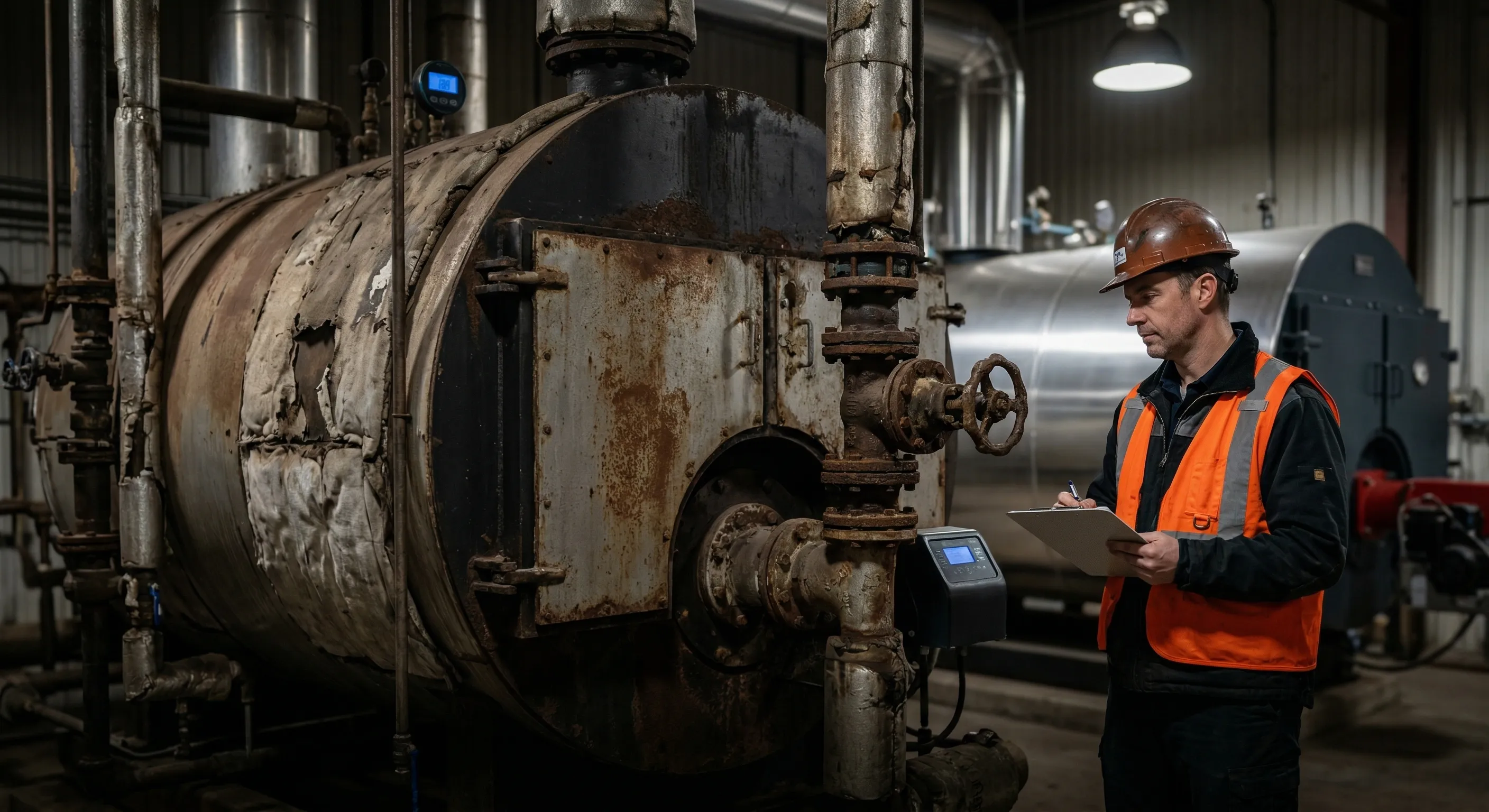
When shutdowns multiply, critical parts become scarce or downtime exceeds what site operations can absorb, spot repairs lose their economic logic. Add unstable combustion despite maintenance, recurring heat exchanger leaks or safety concerns the existing unit can’t adequately address: the shift toward a replacement project enters the management discussion.
How Do You Assess Whether the Boiler Still Fits the Building?
A commercial or institutional building in Greater Montréal may have changed use, zoning or process load since the original installation. An oversized boiler for the current profile falls into short cycling, which can hurt real-world efficiency and component longevity. A revised sizing exercise based on current thermal loads avoids repeating an earlier mismatch.
What Gains Can You Realistically Expect from an Upgrade?
Newer technologies often offer better modulation ranges, finer controls and smoother integration with building management systems — the territory of micromodulation and O2 trim in the boiler room. Without quoting guaranteed savings here, improvements in rated efficiency and reduced real-world standby losses often combine with simpler maintenance. The existing loop still has to let the chosen technology work: the condensing vs non-condensing boiler decision is settled by return water temperature before anything else. Site-level energy optimization — insulation, destratification, heat recovery — remains the multiplier for those gains.
How Do You Plan the Transition Without Surprising the Operator?
Anticipate shutdown windows, temporary heating rental needs and coordination with water treatment and process plumbing. Montréal Combustion supports projects across the Rive-Nord, the Rive-Sud and Greater Montréal with a straightforward approach: honest diagnosis, clear technical options and commissioning focused on long-term reliability.
How Do You Document the Decision for Stakeholders?
A summary sheet comparing breakdown history, repeated interventions, heat exchanger condition and local regulatory constraints helps financial and operational leadership share the same frame of reference. Work on gas-fired and pressurized equipment falls under regulated competencies: planning must include commissioning, combustion testing and safety validations by qualified personnel, with no shortcuts on existing device compliance.