
Rooftop Units: Preventive Program and Common Faults
What a preventive maintenance program for RTUs covers, the faults that recur most often, and how to limit unplanned downtime.
At a Glance
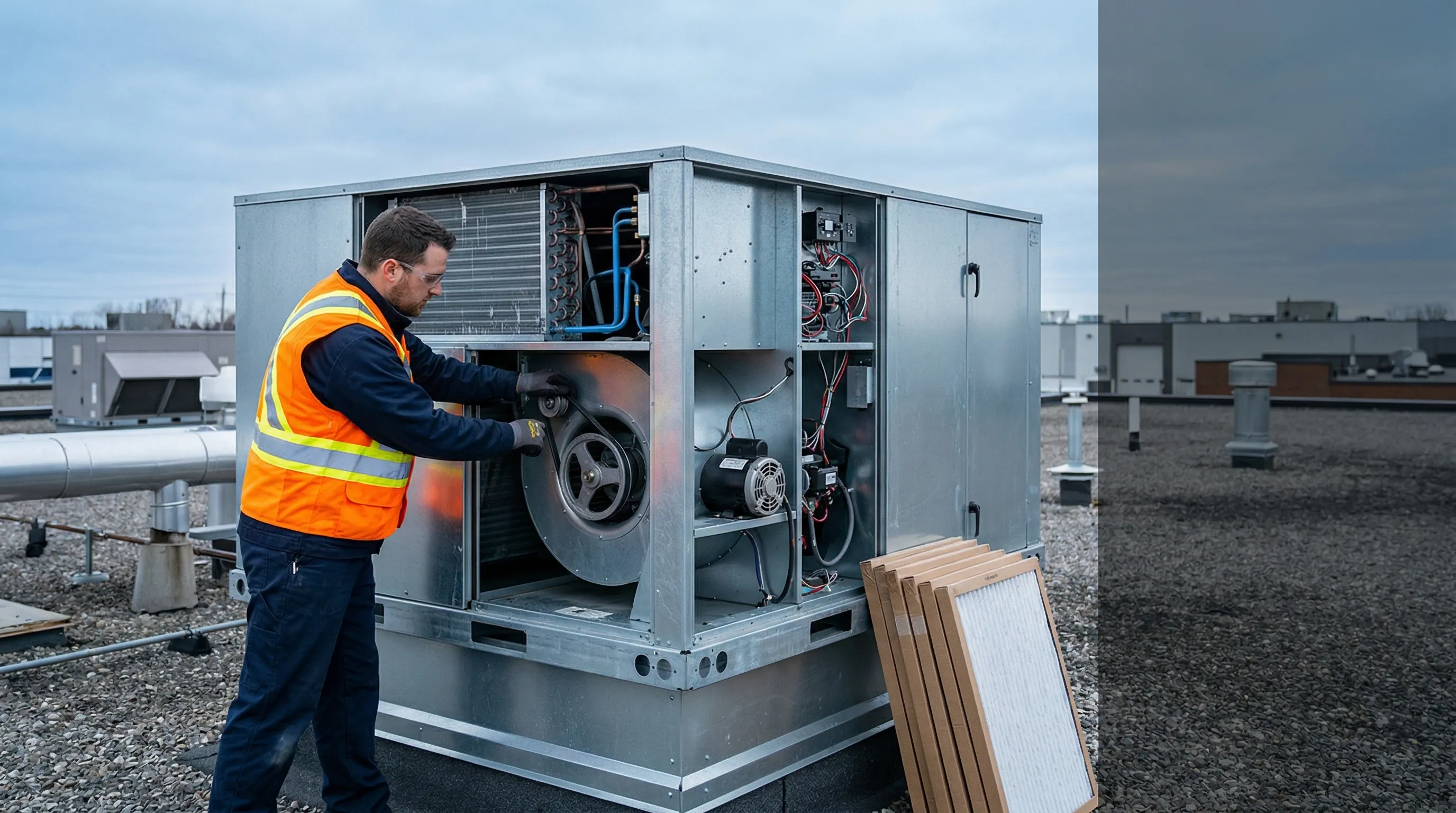
Rooftop units (RTUs) combine ventilation, cooling and often heating in one enclosure; their reliability depends on filters, belts, heat exchangers and calibrated controls. Structured seasonal maintenance reduces airflow- and sensor-related issues. Troubleshooting should isolate the root cause rather than reset without diagnosis.
What Is an RTU and Why Does Its Maintenance Affect the Entire Served Area?
A rooftop unit typically combines ventilation, heating and cooling coils, and controls in a single rooftop enclosure. In retail or light industrial applications, a single RTU can serve multiple zones through ductwork networks. A drop in airflow or a poorly drained condensate point can simultaneously impact sales floors, offices or production areas.
What Tasks Make Up an Effective Preventive Maintenance Program?
Visual inspection of coils — never conclusive on its own, since condenser coil cleaning is only proven by measurement —, cleaning or replacing filters — where the choice of MERV ratings drives both airflow and filtration quality —, checking belts and pulleys, verifying accessible lubrication points and testing startup sequences form the foundation. Sensors and pressure switches must be consistent with the building’s setpoints: a calibration drift can cause short-cycling or unexpected shutdowns with no obvious “hardware” fault. Add to that the rooftop economizer check, too often rushed: its damper can sit stuck for entire seasons without raising a single alarm.
What Are the Most Common Faults Found During Troubleshooting?
High- or low-refrigerant-pressure lockouts — a frequent pattern in commercial air conditioning troubleshooting as well —, sensor faults, ignition or flame issues on gas sections, and communication failures with the building management system are frequent. Tracking alarms over several weeks helps distinguish a one-time event from a progressive drift — such as a slow leak or increasing fouling.
How Do You Balance Maintenance and Operational Continuity in Greater Montréal?
Across Greater Montréal, the Rive-Nord and the Rive-Sud, intervention windows must account for roof access, weather conditions and business hours. Montréal Combustion favors maintenance plans tailored to actual building usage and a troubleshooting approach that documents the cause and the fix, to reduce repeat breakdowns.
How Does the Outdoor Environment Affect RTU Reliability?
Melting snow, leaves and debris can block condensate drains or air passages if screens aren’t maintained. Day-to-night temperature swings stress reversing valves and compressor crankcase heaters during shoulder seasons. A structured visit before summer and winter peaks reduces surprises when the building’s thermal load is at its highest.