
Boiler Robustness vs Efficiency in Industrial Sites
In corrosive industrial environments, the highest nominal efficiency is not always the best boiler choice.
At a Glance
In industrial facilities, a high-efficiency boiler can lose value quickly if the surrounding environment accelerates corrosion, electronic failures or unplanned shutdowns. The right decision depends on site fit, operating continuity and total cost of ownership, not just the brochure rating.
Why Is Rated Efficiency Not Enough When Selecting a Boiler?
In an industrial building, a boiler never operates in laboratory conditions. It runs in a real environment with changing loads, maintenance constraints, costly shutdowns and sometimes aggressive airborne contaminants. A technology marketed as highly efficient can become a poor investment if it requires a level of cleanliness, stability or air quality that the facility cannot reliably provide.
What Makes an Environment “Harsh” for a Boiler?
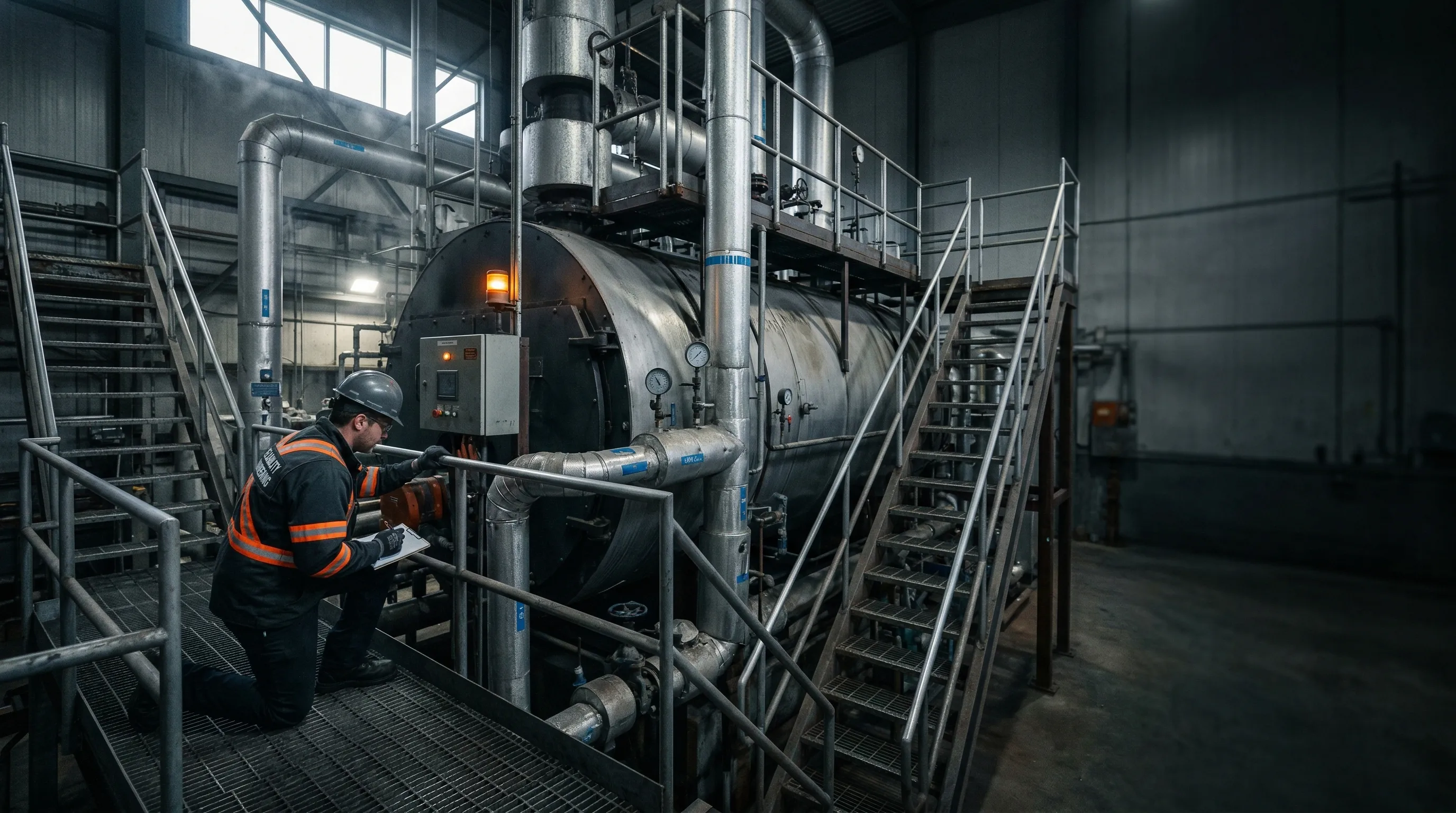
Some facilities expose equipment to moisture, dust, chemical vapors, chlorides, metallic particles or greasy deposits. In those conditions, external corrosion and contamination of controls can shorten equipment life dramatically, even on relatively new installations. Boiler selection therefore has to account for the actual atmosphere of the mechanical room and adjacent process areas, not only for the required heating capacity.
Which Components Suffer the Most from a Poor Site Match?
Electronic boards, connectors, thin-wall heat exchangers, fans, combustion air intakes and regulating components are often the first to be affected. When those parts degrade, the problem is no longer limited to efficiency. The result can be repeated alarms, recurring service callbacks, difficult troubleshooting, parts issues and sometimes premature replacement.
How Does Total Cost of Ownership Change the Decision?
A boiler that uses slightly less fuel but creates more downtime, replacement parts and diagnostic time can easily cost more to operate than a sturdier solution that better matches the site. In commercial, industrial and institutional settings, operating continuity has direct value: occupant comfort, process stability, building protection and reduced pressure on in-house teams. The real question is not whether simple is better than advanced, but how much sophistication the site can support over the long term.
How Should You Validate an Option Before Replacement or Modernization?
Before replacing a boiler, the site should be characterized: ambient air quality, maintenance constraints, failure history, thermal load profile, mechanical access and operating priorities. An independent technical review then helps compare options on practical criteria such as reliability, maintainability, compatibility with existing controls and overall resilience. That comparison applies to the equipment families actually found in Québec buildings, from Cleaver-Brooks industrial boilers to Weil-McLain cast iron boilers. Montréal Combustion can support this evaluation across Greater Montréal, the Rive-Nord and the Rive-Sud with a focus on real performance rather than manufacturer-driven claims.